Buying Land in Coarsegold: What to Check First
April 16, 2026
April 16, 2026
Buying raw land in Coarsegold can feel exciting right up until the big questions start piling up. Can you build on it? Will you need a well? Is septic even possible? If you are looking at land in this part of Madera County, those answers often depend on the specific parcel, not just the listing description. This guide walks you through the local details that matter most so you can evaluate land with more confidence. Let’s dive in.
Coarsegold is an unincorporated foothill community in eastern Madera County, and county planning materials describe the area as a roughly 94-square-mile region centered on Highway 41 and Road 415. It is shaped by rolling Sierra Nevada foothill terrain, lower residential densities, and a land-use pattern that is very different from a typical suburban subdivision lot.
According to county planning documents, the Coarsegold Area Plan includes lower maximum densities than the countywide General Plan, with residential development often tied to larger parcels and rural zoning patterns. In practice, that means buying land here is usually a parcel-by-parcel decision, where zoning, utilities, access, and site conditions all need to be checked carefully.
Before you think about house plans, start with the parcel itself. In Coarsegold, zoning can have a major impact on what may be allowed, and county materials make clear that the current framework relies heavily on rural residential zones for low-density areas.
That is why the first step is confirming the parcel’s APN, zoning, recorded maps, and any easements. The county’s Recorder resources and parcel research tools can help you review official land records and maps as part of your due diligence.
In rural land purchases, the APN is often just as important as the street address. Madera County’s online permit system asks for both the property’s physical address and APN, and that information becomes important when you start checking permit history or future building requirements.
If you are evaluating multiple parcels, keeping each APN tied to your notes can help you avoid confusion. This is especially useful when a property has limited signage, a long private road approach, or a mailing address that does not tell the full story.
A parcel may look great on a map but still come with access limitations. Recorded easements, shared drive arrangements, and road maintenance responsibility should all be reviewed early.
County guidance also suggests checking whether a parcel is located in a special district or maintenance district. That is one more reason why title, maps, and county records should be part of your research before you make an offer.
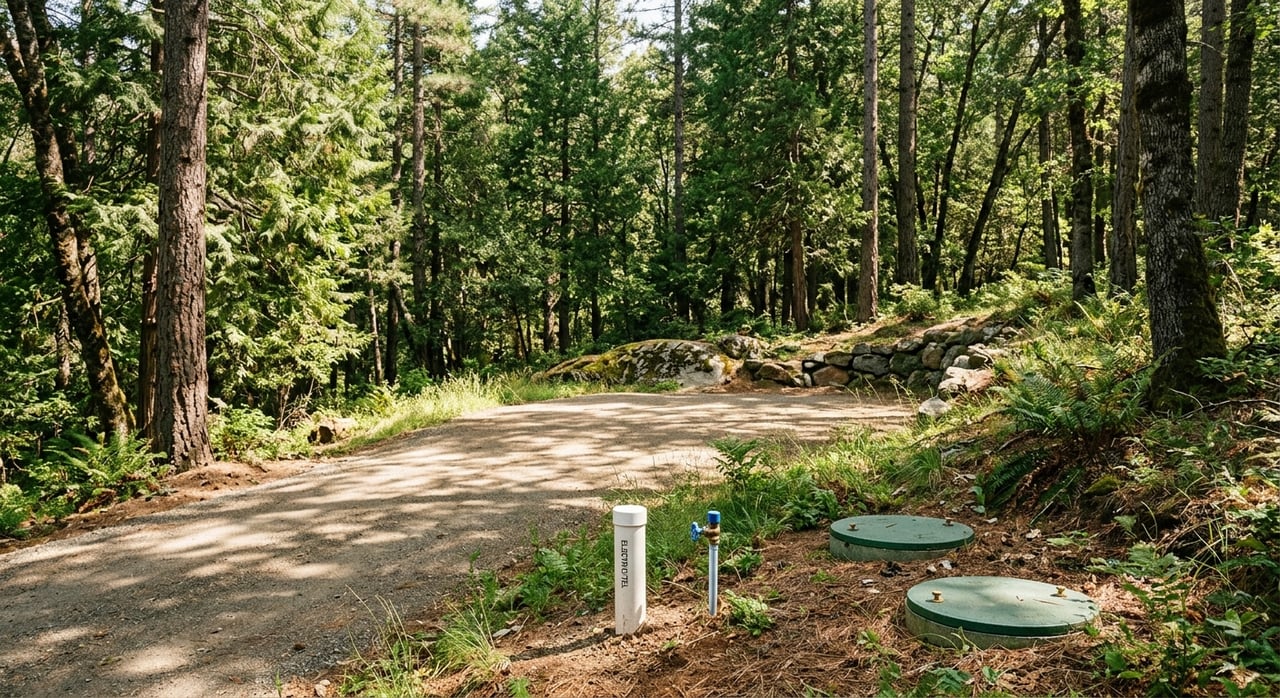
One of the biggest land-buying questions in Coarsegold is water. Unincorporated Madera County depends largely on community and private wells, and county materials note that there are more than 200 independently operated small water systems across the county.
For Coarsegold specifically, county resources say that California American Water’s Hillview service area serves the community, and that service area includes the Coarsegold Highlands Water System with its own source, storage, and distribution facilities. Some parcels may have access to community water, while others may rely on a private well.
In many cases, yes. But not always. That is why you should confirm whether a parcel is inside a service territory or expected to use a private well before you move forward.
Madera County Environmental Health oversees the Water Well Program, including permits for well drilling. The county also offers bacteria testing for private domestic well water, which can be helpful if a parcel already has a well and you want more information about water quality.
If a parcel is not served by sewer, onsite wastewater treatment is likely part of the picture. In Madera County, Environmental Health requires permits for septic work, and the county’s OWTS/LAMP program has been in effect since 2017.
One detail buyers often miss is the reserve area requirement. County guidance says new construction or additions using an onsite wastewater treatment system must show at least 100% reserve area for the active system. That means buildability may depend on soils, setbacks, and having enough usable space for a replacement drainfield.
A parcel can be large but still have limited usable building area. Slope, setbacks, and site layout can all affect whether there is enough room for both the active septic system and its required reserve area.
This is one reason a parcel that seems buildable online may turn out to be more complicated in real life. Septic feasibility is not just a checkbox. It is one of the core pieces of rural land due diligence.
In foothill areas like Coarsegold, access is a major part of whether land can be developed. Madera County’s Fire Marshal reviews development in all unincorporated areas and notes that many parcels require the developer to provide or improve both fire-protection water and access.
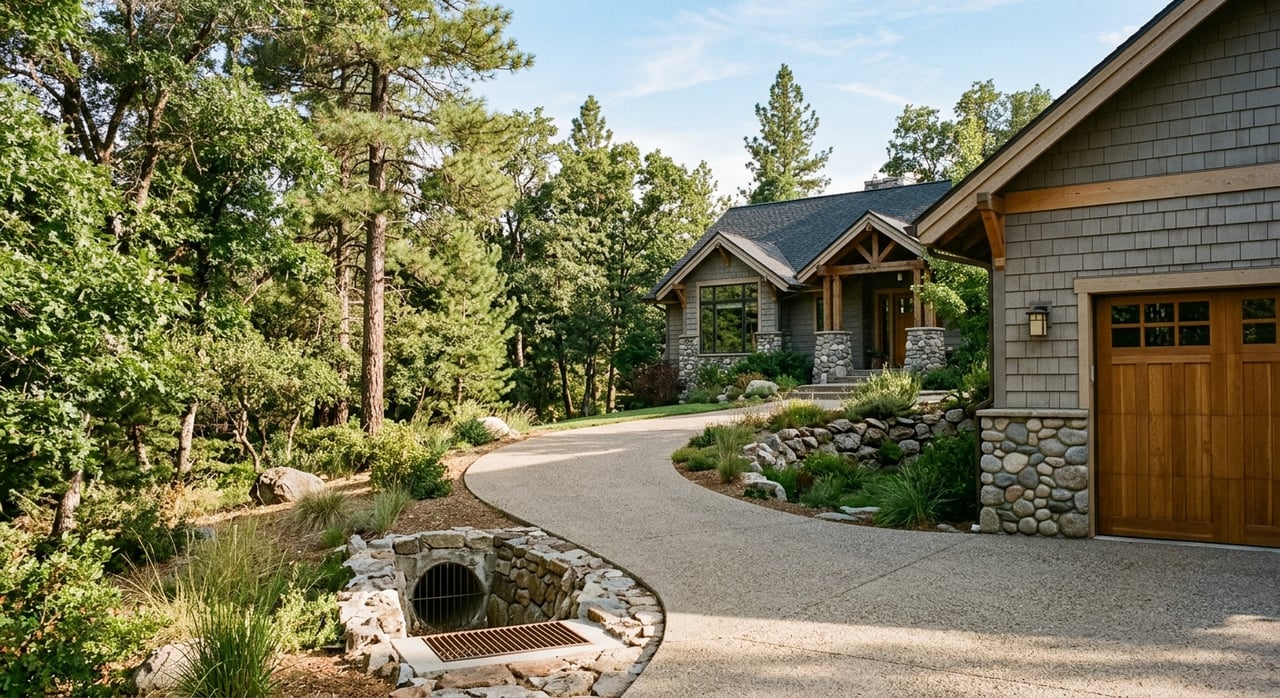
The county’s Fire Division standards include a 12-foot minimum driveway width, 15-foot vertical clearance, a maximum 16% grade, and an all-weather surface capable of supporting a 40,000-pound fire apparatus. Depending on driveway length, turnouts or turnarounds may also be required.
This is where many buyers get surprised. A parcel may meet zoning requirements and still need grading, driveway work, utility trenching, or a fire-water solution before a home can move forward.
County inspection guidance also states that septic and well inspections must be completed and passed before an electrical meter can be set, and road-approach approval may also be required. So when you budget for land, it helps to think beyond the purchase price.
County planning materials identify Coarsegold as a very high fire hazard severity zone. County emergency planning also says Madera County is vulnerable to flooding, wildfires, earthquakes, landslides, drought, and other disasters.
For you as a buyer, that means wildfire readiness should be part of land due diligence from the start. Buildability is not only about whether you can place a home on the site. It is also about access, defensible space, emergency planning, and reviewing insurance options before you commit.
When you are evaluating a parcel, it helps to ask:
These questions can help you look at the property as a future homesite, not just vacant land.
Rural land purchases often involve more than one county office. In Madera County, the Planning Division handles land use for the unincorporated county, while Environmental Health handles wells and septic, and the Fire Division handles fire review.
That matters because the main issue on one parcel may be zoning, while the main issue on another may be septic feasibility or access. Knowing which department controls the key constraint can save you time and help you ask better questions.
If you are getting serious about buying land in Coarsegold, build your review around the items county resources highlight most often:
This kind of checklist can help you compare parcels more clearly and spot issues before they become expensive surprises.
The biggest takeaway is simple: in Coarsegold, land is rarely a plug-and-play purchase. County planning documents and permit guidance point to a process where zoning, water, septic, access, and fire requirements all need to line up before a parcel is truly ready for a home.
That does not mean buying land here is too complicated. It means the best purchases usually come from careful research, realistic budgeting, and a clear understanding of how rural parcels work in this part of Madera County.
If you want a practical sounding board as you compare parcels and ask the right questions, connect with Shannon OBrien. You deserve clear guidance that helps you move forward with confidence.
Stay up to date on the latest real estate trends.
Let me work hard for you and make all your real estate investments easy, fun, and most importantly, happen! I look forward to working with you.

40307 Highway 41 Oakhurst, CA 93644